Youth Softball Stats Tracker That Gets Used
By Carl Andrews · June 29, 2026
A youth softball stats tracker should be fast, simple, and affordable. See what matters most for parents, coaches, and scorekeepers.
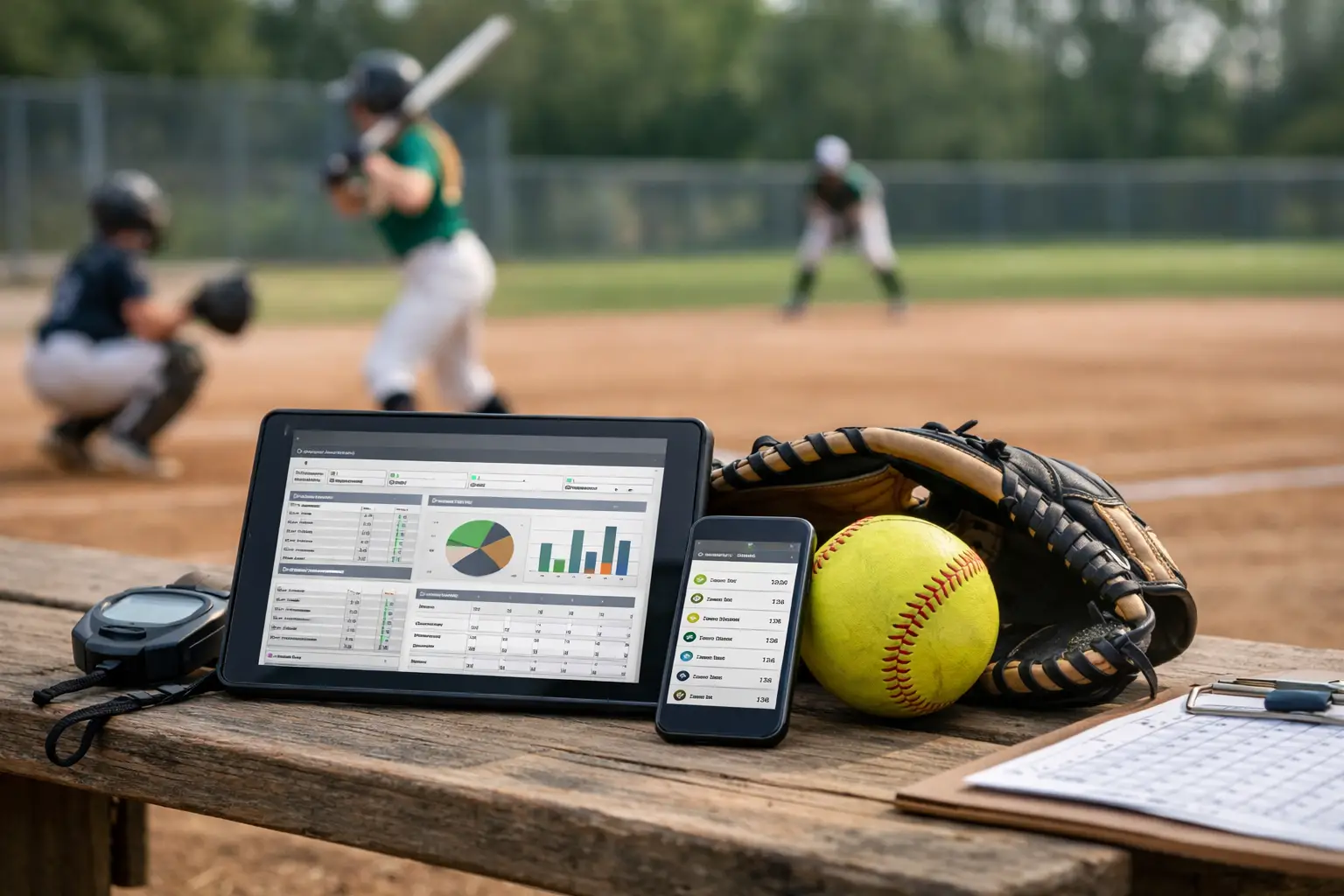
By the third inning, most youth softball scorekeeping systems start falling apart. A parent misses a stolen base while helping with snacks. A coach means to update a spreadsheet later and never does. A paper book gets tossed in a bag and forgotten until the next tournament weekend. That is exactly why a good youth softball stats tracker matters - not because families want more screen time, but because they want a real record of what happened.
For youth teams, the best tracker is not the one with the most buttons. It is the one people will actually use from the bleachers, the dugout, or behind the backstop. If it takes too long, feels too complicated, or turns every game into an accounting project, it will get abandoned by week three. The right setup keeps score live, builds stats automatically, and gives parents and coaches something better than memory.
What a youth softball stats tracker should actually do
At the youth level, scorekeeping has a job to do. It should capture the game clearly enough that the stats are useful, but not so rigidly that a volunteer scorekeeper needs a clinic before first pitch. That balance matters more in softball than people think. Youth games move fast, lineups change, and not every field has reliable space, time, or staff for formal scoring.
A useful youth softball stats tracker should let you log each plate appearance, pitching result, run scored, RBI, stolen base, and defensive outcome without forcing extra steps. Once those events are entered, the tracker should handle the math. Batting average, on-base percentage, pitching totals, box scores, and game logs should come out the other side automatically.
That sounds basic, but it is where a lot of systems fail. Some tools are built for advanced travel teams with dedicated scorekeepers and too many settings. Others are so stripped down that they barely preserve anything beyond the final score. Most families need something in the middle - simple enough for a parent volunteer, detailed enough to be worth using all season.
Why paper and spreadsheets usually lose
Paper scorebooks still have their place. Some coaches love them, and some longtime scorekeepers are incredibly fast with a pencil. But for many youth softball families, paper creates one big problem: the information stays trapped on the page.
If a player had two hits, stole a base, and scored twice on Saturday morning, that performance should not disappear into a notebook sitting in a car console. Coaches should be able to look back at trends. Parents should be able to remember the moments. Team supporters should be able to follow along without needing the scorebook physically handed to them.
Spreadsheets solve the storage problem, but they create a consistency problem. Someone still has to enter everything after the game, formulas break, and if one person owns the sheet, everyone else is waiting on that person. That is usually fine for one week. It gets old across a spring season, summer tournaments, and fall ball.
A browser-based tracker changes the rhythm completely. You enter the play once, during the game, and the stats are there right away. No cleanup project later. No second round of data entry. No wondering whether anyone ever updated the file.
The biggest benefit is not the batting average
Stats matter, but the biggest win is usually clarity.
When a coach can pull up game logs and season numbers, conversations get better. Instead of saying, "I feel like she has been making more contact lately," you can see whether that is true. Instead of guessing who is getting on base consistently, you have a record. Instead of relying on tournament-weekend fog, you can look back at what actually happened.
For parents, the benefit is just as practical. Youth sports seasons blur together fast. A youth softball stats tracker helps preserve the little milestones that tend to vanish - first RBI, multi-hit game, scoreless inning in the circle, smart baserunning that changed a close game. Those moments matter, especially when kids are developing and confidence can swing from one weekend to the next.
Stats are not there to turn 10-year-olds into major leaguers. They are there to provide context, celebrate progress, and create a usable history.
What matters most for softball families
Not every feature deserves equal weight. For most youth teams, speed, simplicity, and access matter more than flashy dashboards.
Fast live scoring
If a tracker cannot keep up with the game, nothing else matters. The scorekeeper should be able to record an at-bat quickly, move runners, mark outs, and continue without hunting through menus. Softball games can get hectic, especially with steals, passed balls, and busy innings. A system that works well in theory but bogs down in real time will get dropped.
Automatic season stats
This is where digital tracking starts to earn its keep. Enter the live game data once, and the season totals should update on their own. That saves time, but it also reduces mistakes. Every manual transfer from paper to spreadsheet is another chance for missed details or bad numbers.
Access from any device
Youth sports do not happen in ideal conditions. One game is at a park with no tables. The next is on a back field with no shade. A youth softball stats tracker needs to work where families already are - on a phone in the bleachers, on a tablet near the dugout, or in a browser at home after the game if something needs a quick check.
Shareable live updates
This feature sounds optional until grandparents, siblings, or an away parent want to follow along. Live game updates make youth softball feel more connected without adding much work when the tracker is set up right. It also helps teams keep supporters in the loop during travel weekends when not everyone can be there.
The trade-off: simple vs detailed
Every stats platform sits somewhere on the line between easy and exhaustive. That is the real decision.
If your team wants advanced charts, pitch-level breakdowns, and detailed splits, you may need a little more setup. If your goal is to record games cleanly and keep a season-long record without frustration, simpler is usually better. There is no trophy for using the most complicated app.
For most youth softball teams, the sweet spot is a tracker that captures enough detail to be meaningful while staying friendly to volunteer scorekeepers. That means it should support core batting, pitching, and baserunning events without pretending every rec or travel team has a dedicated stats department.
Cost matters more than companies like to admit
Youth sports families are already paying for fees, uniforms, gas, hotel rooms, lessons, and team extras. Adding another monthly software bill for basic stat tracking wears thin fast.
That is one reason families are pushing back on subscription-heavy scoring apps. A youth softball stats tracker should solve a problem once, not create a recurring charge that lingers long after the season ends. If the tool is built for grassroots teams, the pricing should reflect that reality.
A one-time purchase makes more sense for a lot of parents and coaches. It removes the mental math, keeps the platform usable across multiple teams and seasons, and feels a lot more honest. Baseball Stats Tracker leans into that with a browser-based system built for the bleachers, not the press box, and a one-time purchase instead of another monthly fee.
Who should be tracking stats on a youth team?
The best answer is whoever will actually do it consistently.
Sometimes that is a coach. Often it is a team parent. On some teams, two or three supporters share the job across a weekend. The ideal youth softball stats tracker makes that possible by keeping everything in one place and syncing across devices, instead of tying the whole season to one clipboard or one laptop.
Consistency matters more than expertise. You do not need a former college scorekeeper to create useful stats. You need a system that makes ordinary game tracking feel manageable for ordinary families.
When stats help and when they do not
Stats are useful when they support development. They are less useful when adults use them to force big conclusions from small samples.
A player going 0-for-3 in one game is not a trend. A hitter putting the ball in play hard for three straight weekends might be. A pitcher giving up runs in one rough inning does not tell the whole story, but a season log can help show growth, workload, and command over time.
That is the right mindset for youth softball. Use stats to spot patterns, support coaching decisions, and remember progress. Do not use them to make kids feel like they are under a microscope.
The best youth softball stats tracker is the one that survives real life
Real life is rain delays, cramped bleachers, loud dugouts, and parents juggling three things at once. It is not a clean lab test. That is why the best tracking system is usually the one that respects the chaos and still gets the job done.
If it is easy to open, quick to update, and affordable enough to keep using season after season, it has a real chance to become part of the team routine. That is the standard that matters. Not fancy marketing. Not endless features. Just a clear, lasting record of the games your player worked so hard to play.
A good stats tracker does not need to make youth softball more complicated. It should make the season easier to follow, easier to remember, and a lot harder to lose.
One payment. Every season.
Live scoring, automatic stats, spray charts. $39 once, no subscription.
Get Instant Access — $3930-day money-back guarantee — no questions asked.