Best Baseball Scorebook Alternative for Teams
By Carl Andrews · July 2, 2026
Looking for a baseball scorebook alternative? Track games live, save season stats, and skip paper, spreadsheets, and monthly app fees.
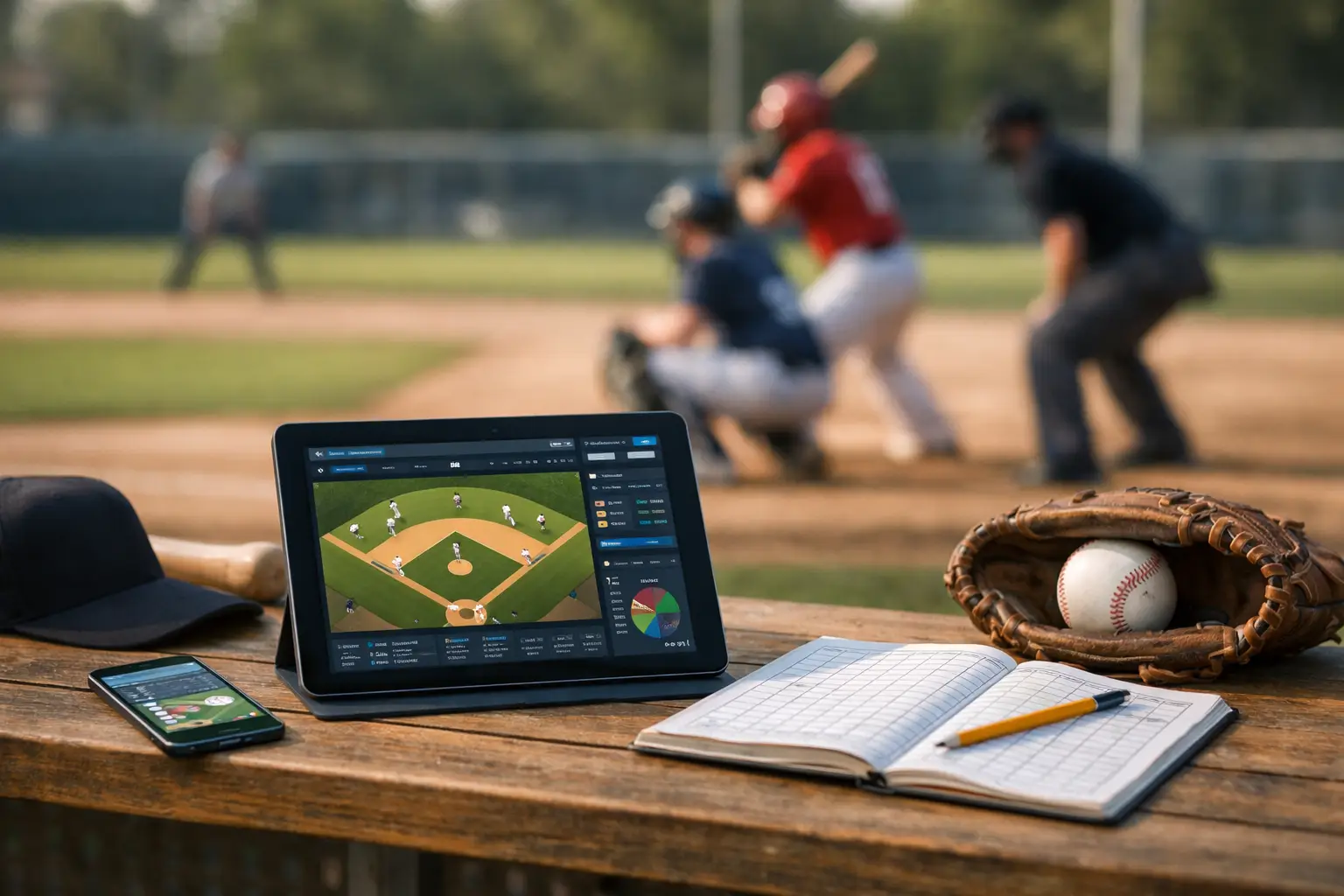
If you've ever tried to keep a paper scorebook balanced on your knee while a youth game moves at full speed, you already know the problem. A good baseball scorebook alternative is not about replacing tradition for the sake of it. It's about making sure the game actually gets recorded, the stats actually get saved, and the season doesn't disappear into a notebook that never leaves the car.
For most youth baseball and softball families, the issue isn't whether paper can work. It can. The issue is whether paper still works once the game gets messy, the lineup changes, two people need the score at once, and someone asks for pitching totals three weeks later. That's where old-school scorekeeping starts to fall apart.
What a baseball scorebook alternative should actually fix
A real replacement for a paper scorebook has to solve more than handwriting. It should make game scoring faster in the moment and more useful after the last out.
Paper scorebooks are great at capturing one game if the person keeping score is experienced, focused, and sitting somewhere stable. That is not how most youth games happen. Parents are in the bleachers. Coaches are juggling substitutions. Volunteers step in with good intentions but not a lot of scorekeeping training. Even when the scorebook gets filled out, the information often stays trapped on paper.
A better system should handle live scoring, organize rosters, calculate stats automatically, and make the information easy to pull up later. If it still leaves you adding batting averages by hand or copying notes into a spreadsheet, it's only half a solution.
Why paper scorebooks stop working for most teams
The biggest problem with paper is not accuracy. It's follow-through.
At the start of the season, a paper book feels manageable. By midseason, things get crowded. Rain makeup games get added. Guest players show up. Pitch counts matter. Coaches want on-base percentage, not just hits. Parents want to remember that inside-the-park home run from a tournament in April. Suddenly one scorebook isn't a simple record. It's a bottleneck.
Paper also creates a one-person system. If one parent has the book, everyone else is waiting on that one person for updates. If the book is forgotten, lost, or hard to read later, the record is gone. That's frustrating for coaches trying to make lineup decisions, and it's disappointing for families who want more than a vague memory of the season.
There is also the reality that most youth teams do not need ceremonial scorekeeping. They need useful scorekeeping. They need to know who pitched, who got on base, who drove in runs, who stole bags, and how players are trending across a season. That is much harder to manage with paper than people like to admit.
The best baseball scorebook alternative is built for the bleachers
A practical baseball scorebook alternative should work from a phone, tablet, or laptop without turning the scorekeeper into a full-time statistician. That matters because youth sports are run by busy people, not a press box crew.
The right setup lets a parent score from the stands, a coach check results later, and another family member follow along without needing the physical book. That kind of flexibility changes the experience. Instead of stats becoming an extra chore after the game, they are created as the game happens.
This is where digital scorekeeping has a clear edge. When each play updates the game record and season totals at the same time, you stop doing the same work twice. You're not scoring now and organizing later. You're scoring once and keeping the whole season in order.
What to look for in a baseball scorebook alternative
Not every scoring app or tool is a true alternative. Some are overloaded, expensive, or clearly built with college or pro workflows in mind. Youth teams need something simpler.
First, the scoring flow has to make sense. If entering a walk, strikeout, stolen base, or pitching change takes too many taps, volunteers will stop using it. Youth games move quickly, and most scorekeepers are learning as they go.
Second, it should turn game input into stats automatically. Batting totals, pitching lines, box scores, and season numbers should not require manual cleanup later. Otherwise you're just replacing a scorebook with a spreadsheet problem.
Third, it should be easy to access from anywhere. Browser-based tools have a real advantage here because families are not all using the same device. Some score from a phone, some from a tablet, some check stats later from a home computer. If a system is locked into one device or one app install, it creates friction where there doesn't need to be any.
Finally, pricing matters more than vendors sometimes realize. Youth baseball and softball already come with enough recurring costs. A monthly fee for scorekeeping can feel small at first, then annoying by the second season. A one-time purchase is often the better fit for families and small organizations that just want a dependable tool without another subscription hanging over them.
Paper vs apps vs a true scorebook replacement
Paper scorebooks still appeal to people who like tradition, and there is nothing wrong with that. They are inexpensive up front, familiar, and fine for basic game records. But they do not scale well across a full season, especially when multiple people need access to the information.
Some sports apps solve the paper problem but create a different one. They can be packed with features you didn't ask for, tied to recurring monthly payments, or designed in a way that assumes every user is already comfortable with advanced scorekeeping. That can be just as discouraging as paper, just with a login screen.
A true baseball scorebook alternative sits in the middle. It keeps the core function of scoring the game clearly and accurately, but it removes the parts that waste time. It should feel simple during the game and valuable after the game. If it does both, it earns its spot.
For many youth teams, that means choosing a platform like Baseball Stats Tracker. It was built for the bleachers, not the press box, and it reflects what families actually need: live game scoring, automatic baseball and softball stats, multi-device access, and a one-time purchase instead of another monthly bill.
Why season-long stats matter more than people think
A lot of families start looking for a baseball scorebook alternative because they want an easier way to keep score. They stay with it because the season data becomes useful fast.
Once games are tracked consistently, coaches can spot patterns they would otherwise miss. Maybe a player is reaching base more often than their batting average suggests. Maybe a pitcher is throwing more strikes in relief than in starts. Maybe a hitter's spray chart shows they're late on everything outside. Those are coaching insights, not just numbers for the sake of numbers.
For parents, there is an emotional side too. Youth seasons move quickly. Unless someone records the details, great moments get reduced to a few phone photos and a rough memory on the drive home. A permanent game log gives families something better. It preserves progress, not just highlights.
That matters for developing players. It matters for all the ordinary games in March and April that nobody posts about but that still shaped the season. And it matters for kids who want to look back and see that their work showed up somewhere real.
The trade-off is simple: tradition or usability
There is still a place for paper if you enjoy it and have someone committed to doing it well every game. But for most teams, the trade-off is pretty clear. Paper gives you tradition. A strong digital alternative gives you usability.
If your current setup depends on one person, gets harder as the season goes on, and doesn't produce stats without extra work, it's probably not serving the team as well as it could. If your app charges every month and still feels clunky, that's not much better.
The best baseball scorebook alternative is the one people will actually use from first pitch to final tournament weekend. It should save time, reduce missed details, and make the season easier to follow for coaches and families alike.
When scorekeeping fits real youth baseball life, it stops feeling like homework. It becomes part of how you remember the season while it's still happening.
One payment. Every season.
Live scoring, automatic stats, spray charts. $39 once, no subscription.
Get Instant Access — $3930-day money-back guarantee — no questions asked.